The Research Workflow I Wish I Knew in Grad School

The Research Workflow I Wish I Knew in Grad School
I almost failed my thesis.
Not because I was not smart enough. Not because I did not work hard. I was pulling 60-hour weeks, drowning in papers, and still could not find that one quote I knew I had read somewhere. My "system" was 47 browser tabs, three half-filled notebooks, and a growing sense of dread every time my advisor asked for an update.
Three years of chaos. Then I discovered a workflow that turned my scattered mess into a searchable, listenable, automated knowledge base.
Here is what I wish someone had told me on day one of grad school.
The Breaking Point
It was 2 AM, three weeks before my thesis defense. I needed a specific statistic about renewable energy adoption rates that I had read months ago. I remembered the idea perfectly. I had no idea where I had seen it.
I checked:
- My browser history (47,000 entries deep)
- My Downloads folder (a graveyard of "paper_final_FINAL.pdf")
- My Google Drive (organized into folders I had forgotten existed)
- My physical notebook (flipping through 200 pages of handwriting)
Two hours later, I found it. In a ChatGPT conversation I had closed without saving. The insight was gone forever.
That night, I realized something: The problem was not my memory. It was my system.
I was collecting knowledge like a hoarder collects newspapers — piling it everywhere with no way to find anything when I needed it.
The Discovery: Your Research Should Work For You
A few weeks after my defense (which I survived, barely), a colleague showed me something that changed everything.
She pulled out her phone during lunch and said, "I am listening to my research."
I thought she meant audiobooks. She meant something better.
She had figured out how to turn her papers, notes, and even AI conversations into a private podcast she could listen to while walking, cooking, or commuting. But that was just the output. The real magic was the system behind it.
She had stopped organizing and started automating.
Instead of manually filing papers into folders, she dumped everything into one place and let the system sort itself. Instead of taking notes on readings, she generated briefings automatically. Instead of losing insights in closed browser tabs, she captured everything permanently.
I wanted that. More importantly, I wanted the outcome: never losing an insight again, learning while I walked, and actually finding things when I searched for them.

The Workflow: Capture → Process → Consume
Here is the exact system I built. It is deceptively simple, but the results are anything but.
Step 1: The Capture Phase (Stop Losing Things)
The first rule: If it is important, it goes in the system immediately. No exceptions.
Here is what I capture now:
- Research papers → Drag PDFs directly in, or import from arXiv, Google Scholar, or any URL
- AI conversations → One-click import from ChatGPT, Claude, Gemini, Perplexity (I learned my lesson)
- Web articles → Highlight anything interesting, snipe it in seconds
- Notes & thoughts → Voice memos, quick text dumps, screenshots
- Social threads → Twitter/X discussions, Reddit posts, LinkedIn articles with insights
The key insight: Capture first, organize never. The system handles the organizing. You just need to get things into it.
I used to spend 30 minutes after every reading session "filing things properly." Now I spend 30 seconds hitting "import" and move on.
Step 2: The Processing Phase (Let Automation Do the Work)
This is where the magic happens. Instead of manually summarizing, tagging, and connecting ideas, I let automations handle it.

Here is what runs without me:
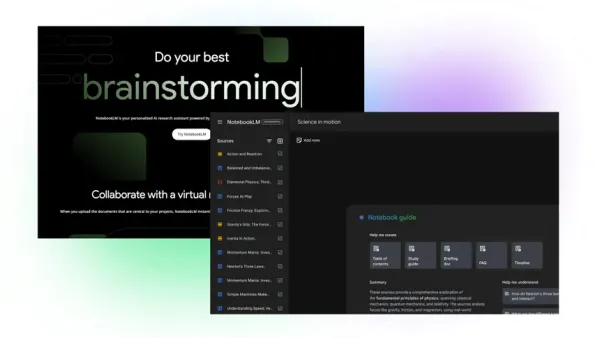
Auto-Researcher: Feeds my sources into NotebookLM and generates briefing documents automatically. I wake up to synthesized summaries of everything I captured yesterday.
Smart Sort: Automatically categorizes sources by topic, date, and relevance. No more manual folder creation.
Generator: Creates study guides, flashcards, and review documents from my sources without me lifting a finger.
The result? I used to spend 3 hours every Sunday organizing and summarizing my week is research. Now I spend zero. The system runs while I sleep.

Step 3: The Consumption Phase (Learn however fits your life)
Here is what nobody tells you in grad school: Reading at your desk is the least efficient way to learn.
Your brain needs variety. It needs movement. It needs to process information in different contexts.
My new consumption system:
Morning commute (30 min): Listen to a podcast episode generated from yesterday is research. I use the private RSS feed so it shows up in my regular podcast app.
Lunch break (20 min): Review the auto-generated briefing doc. It is already summarized the key points, so I just skim for insights.
Evening walk (45 min): Listen to another episode, or use the embedded player to review specific sources I flagged.
Weekend deep dive (2 hours): Search the knowledge base for connections. With everything in one place and fully searchable, I find patterns I had never have noticed before.

The result? I am consuming 2x more research in half the time. And I am retaining more because I am not just reading — I am listening, reviewing, and connecting.
The Specific Results (By The Numbers)
Let me quantify what changed, because I know grad students love data:
| Before | After |
|---|---|
| 3 hours/week organizing | 0 hours (automated) |
| 47 browser tabs open | Everything searchable in one place |
| Lost 30% of AI insights | 100% captured permanently |
| Reading only at desk | Learning 5+ hours/week during commute/walks |
| Sunday panic sessions | Monday morning briefings ready automatically |
| Could not find quotes | Find anything in <10 seconds |
Time saved: 5+ hours per week
Stress level: From "constant anxiety" to "actually enjoying research"
Thesis completion: Would have shaved 2-3 months off my timeline if I had started with this system
The Lifestyle Change (What I Do Now That I Could not Before)
The biggest surprise was not the time saved. It was the mental space gained.
I used to carry research anxiety everywhere. In the shower, I had worry about that paper I could not find. At dinner, I had mentally replay conversations with my advisor. I was never fully present because some part of my brain was always trying to remember where I had saved something.
Now? I capture everything instantly and trust the system. When I am not working, I am actually not working. My brain knows that if it is important, it is in the system, and I can find it in 10 seconds when I need it.
Unexpected benefits I did not anticipate:
- Better sleep: No more 2 AM panic searches
- Better conversations: I can reference specific studies instantly instead of saying "I read something about that somewhere..."
- Better writing: With everything searchable, I find connections between papers I had never have noticed
- Better advisor meetings: I walk in with auto-generated briefings instead of scattered notes
Why This Works (The Psychology)
There is a principle here that applies beyond research: Friction kills systems.
Every extra step between "I found something interesting" and "I can find it again later" is a point of failure. My old system had friction everywhere:
- Download PDF → Find the right folder → Name it properly → Move it there → Remember where I put it
- Read article → Take notes in separate doc → File notes → Hope I remember to check them later
- Have AI conversation → Copy insights → Paste somewhere → Format properly → (usually forget)
The new system removes friction:
- Find something → Click import → Done
- Everything is automatically organized, summarized, and made searchable
- I can consume it however fits my life: reading, listening, or skimming briefings
The capture → automate → consume loop works because it respects how your brain actually functions. You do not need willpower to maintain it. It maintains itself.
The "I Wish I Knew" List
If I could go back to day one of grad school, here is what I had tell myself:
- Start capturing immediately. Do not wait until you "have a system." Just dump everything into one place. You can organize later (or better, let automation do it).
- Stop taking notes on paper for things you will need to search later. Handwriting is great for processing, terrible for retrieval. Capture the source digitally, then process it however you want.
- Your AI conversations are research gold. Those 2-hour ChatGPT sessions where you worked through complex ideas? That is original research. Save it. You will want it later.
- Listen to your research. Your commute is 5-10 hours per week of potential learning time. Do not waste it on music you do not care about.
- Automate the boring stuff. If you are doing something repetitive (organizing, summarizing, formatting), there is probably a way to automate it. Find it.
- Build for search, not for browsing. You will never "browse" your research library. You will search it. Optimize for findability, not pretty folders.
Reader Challenge: Try This for One Week
You do not need to overhaul your entire system today. Just try this:
Day 1: Install Kortex and import one source — a paper, an AI conversation, or an article you have been meaning to read.
Day 2-3: Capture everything you read or generate via AI. Do not organize it. Just import it.
Day 4: Generate your first podcast episode from your sources. Listen to it during a walk or commute.
Day 5-7: Let the automation run. Check your briefing doc each morning. Notice how much you remember without trying.
At the end of the week, ask yourself: How much mental space did I reclaim?
Who This Is (and Is not) For
Try this workflow if:
- You are drowning in papers, tabs, and notes
- You keep losing insights you know you had
- You want to learn more but do not have more time
- You are tired of organizing more than actually learning
Do not bother if:
- You love manual organization (some people do!)
- You only work with 2-3 sources at a time
- You prefer reading at your desk and do not want audio options
- You are looking for a magic solution without any setup
This is not magic. It is a system. It takes 10 minutes to set up and pays dividends forever.
The Bottom Line
Grad school does not have to be a chaos of lost papers and 2 AM panic searches. The tools exist to build a system that works for you instead of against you.
I spent three years doing it the hard way. You do not have to.
The workflow is simple: Capture everything. Automate the organization. Consume however fits your life.
Your research should work for you. Not the other way around.
Ready to build the research workflow I wish I had?